[INSPIRATION] PEOPLE – Up at Minton’s with Romare Bearden (1911 – 1988)

[On becoming an artist]...become a blues singer - only you sing on the canvas
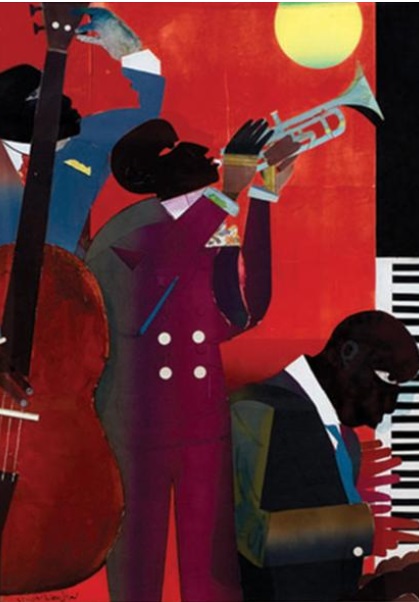
Released in 1980, Romare Bearden’s painted collage, Up at Minton’s is an homage to an iconic jazz supper club in Harlem, New York started in 1938 by saxophonist, Henry Minton. This colorful, vibrant image shows an African American trio of jazz musicians playing at the club.

Bearden called his technique collage painting. He started by collecting images of a subject from magazines, newspapers and wallpapers. Then the images were arranged and glued onto a large canvas. Finally, Bearden would paint in sections of the composition.

Deeply inspired by jazz and blues, Bearden loved to improvise in his art much like musicians. In becoming an artist, he would say “become a blues singer – only you sing on the canvas. You improvise — you find the rhythm and catch it good, and structure as you go along – then the song is you.” (NGA.gov)
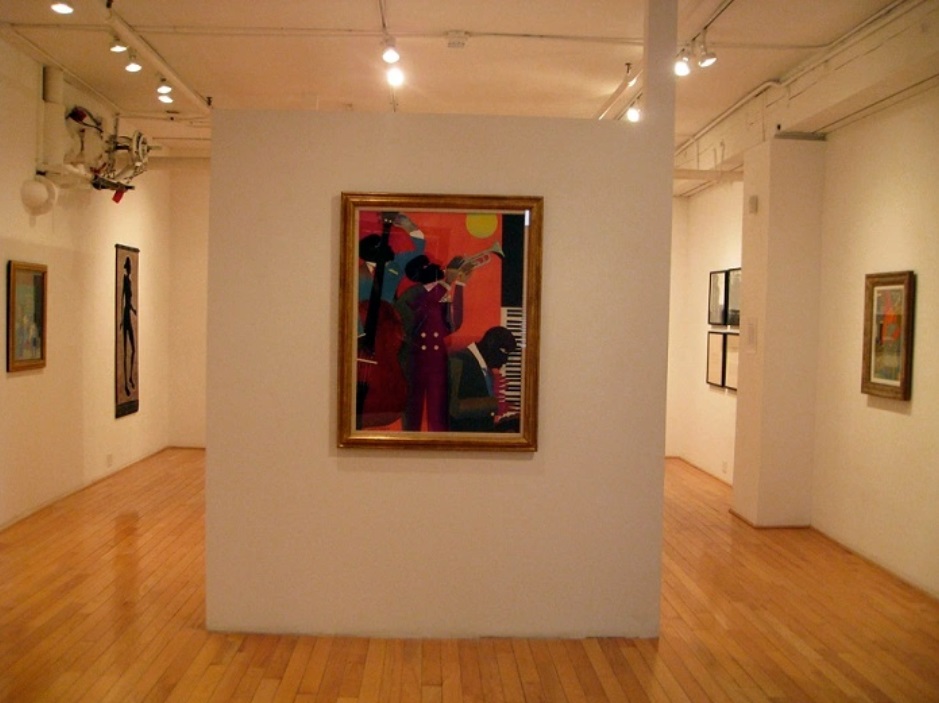

Image credit: Up At Minton’s at the Flomenhaft gallery in Manhattan, NY. Art Observer, 2012

Bearden’s painting Up at Minton’s is based on the iconic Minton’s Playhouse, a jazz dinner club located in the Cecil Hotel in Harlem, New York City. The club was started by saxophonist Henry Minton in 1938 and is credited as the birthplace of Bebop (aka Modern Jazz). Since the 1940’s, Minton’s has hosted an extensive roster of players namely, Thelonius Monk, Charlie Parker, and Dizzy Gillespie. The club closed in 1974 and was reopened in 2006; closed again in 2010 to reopen in 2012. Today, under proprietor, Earl Spain, the new Minton’s Playhouse has an active calendar of today’s musicians.

Image Credit: Romare Bearden Foundation website
https://beardenfoundation.org

About the Artist
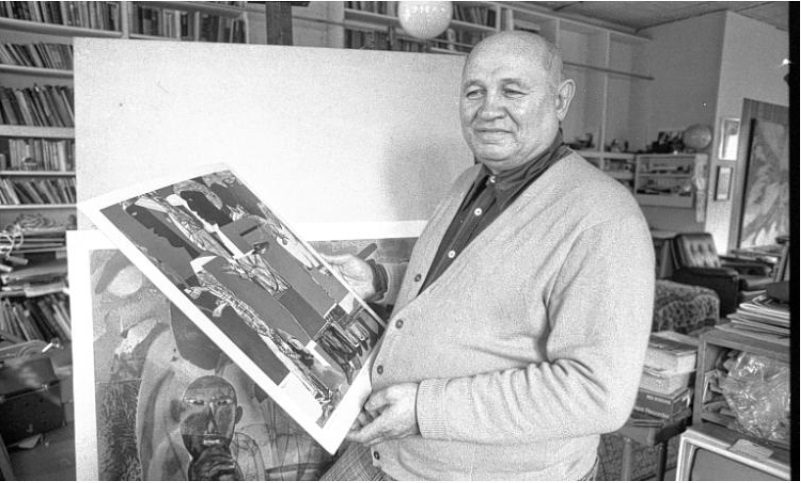
Image Credit: Romare Bearden Foundation website:
https://beardenfoundation.org/romare-bearden/

Romare Bearden was born in 1911 in Charlotte, North Carolina and died in 1988. As a young child, he moved from the South to Harlem in Manhattan, New York City.

This move surely represented a 180-degrees in that Bearden was exposed to the vibrant arts and sounds of the bustling Harlem community.

Image Credit: Romare Bearden Foundation website
https://beardenfoundation.org/projects/

As a growing teenager and young adult, Bearden would decide to become an artist; routinely visit family in North Carolina and spend summers working in Pittsburgh, Pennsylvania. He went to New York University for schooling and also studied art history and philosophy at the Sorbonne in Paris, France.
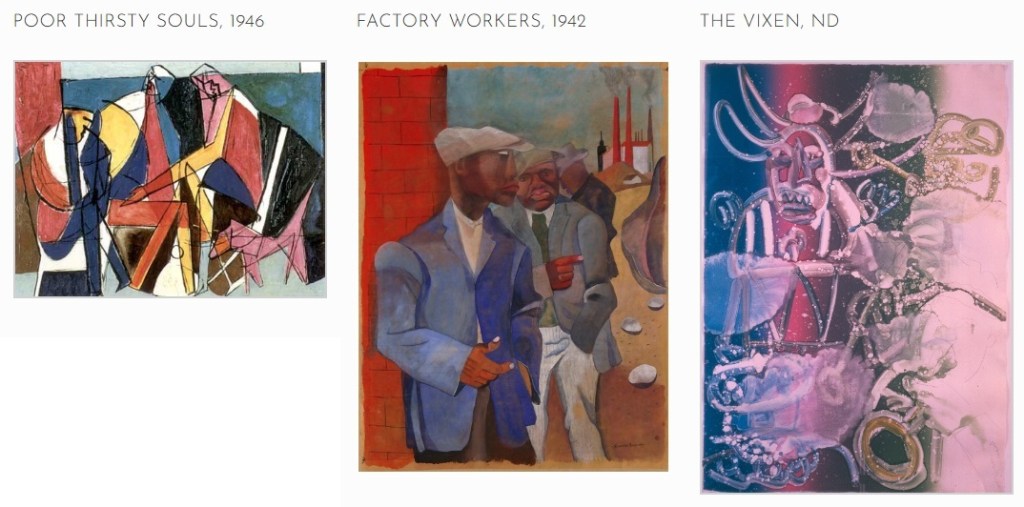
Image Credit: Romare Bearden Foundation website,
https://beardenfoundation.org/oils/

As an artist, Bearden’s work is prolific and crosses multiple media such as painting, collage, and sculpture. This is among the many things I admire and take from Romare Bearden. It is that as an artist, you don’t have to be “married” to one media such as textiles or paint. Since art is about expressing and sharing your thoughts, you can represent your art in as many ways as necessary.
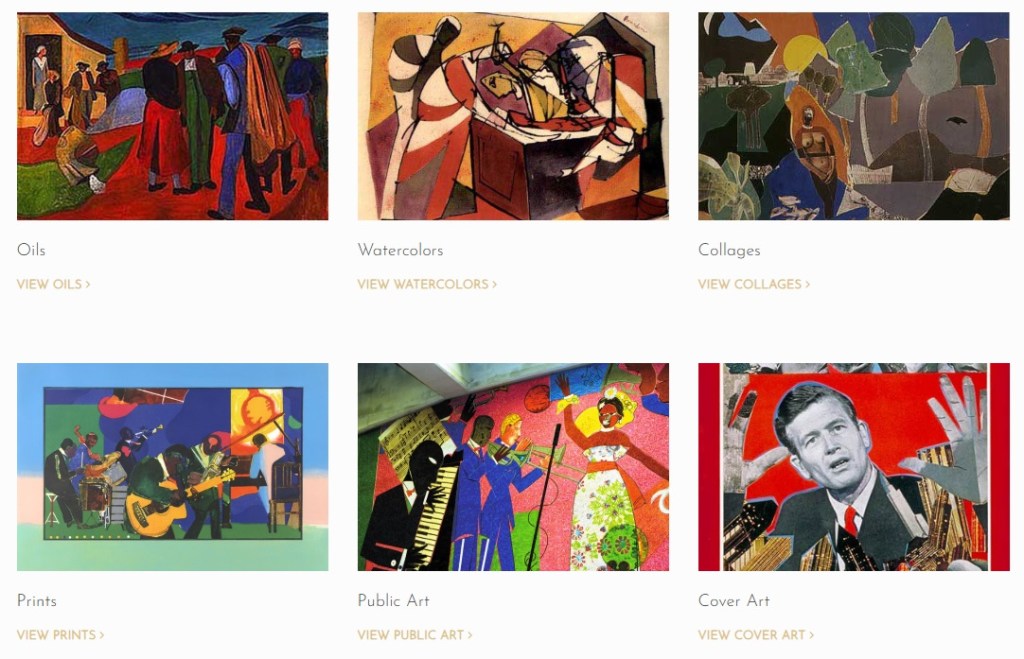
Image Credit: Romare Bearden Foundation website,
https://beardenfoundation.org/art/

His work has influences from world culture, music, design, and life. Much of his work depicts African American life in the South and the Harlem Renaissance in the 1920’s which captured the emergence of the arts by African Americans in the United States.

Image Credit: Romare Bearden Foundation website,
https://beardenfoundation.org/arts-education-program/

Romare Bearden had great interests in celebrating and promoting the work of African American artists. He formed an art collective called Spiral, which allowed its members to discuss exhibiting art that would comment on the Civil Rights Movement. Bearden’s art career and achievements are something to be admired. His work can be found permanently in the Smithsonian Museum, Metropolitan Museum and many others.

Image Credit: Romare Bearden Foundation website,
https://beardenfoundation.org/art/

In 1990, the Romare Bearden Foundation was formed to promote and sustain Bearden’s legacy as a prominent African-American artist.
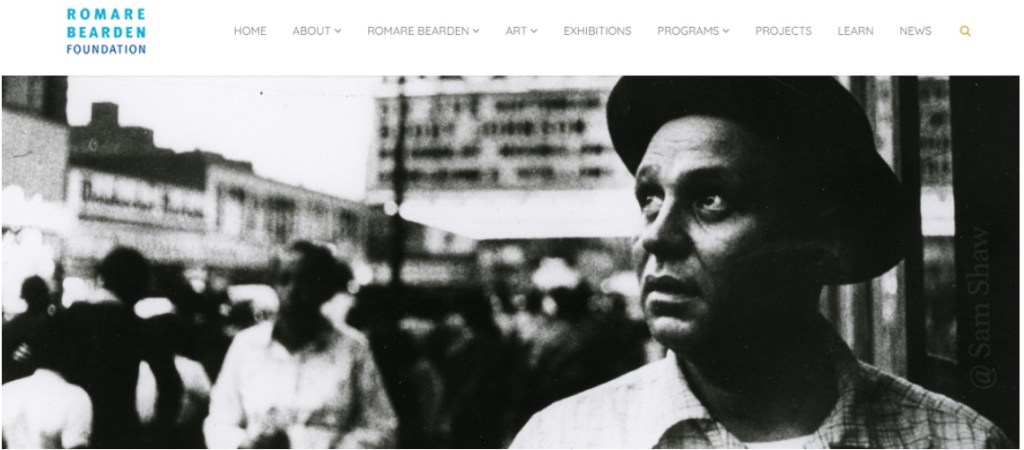
Image Credit: https://beardenfoundation.org/

What inspires me about Romare Bearden

I choose Bearden because he was a prolific artist in different medium. As he said – “become a blues singer – only you sing on the canvas. You improvise — you find the rhythm and catch it good, and structure as you go along – then the song is you.” This to me, embodies what I strive to do as an artist. That is, to step into the world I am purveying, learn the cadences to make the art tell a story. Then, I keep it moving. – Angela


Resources

[INSPIRATION] PEOPLE – 3D World of Color by Jeff Hanson (1993 – 2020)

living a purple-driven life

Meet Jeff

I was first introduced to Jeff Hanson’s paintings when I saw his story on CBS’ Sunday Morning program. Around the same time, I was nursing an injury that stopped me from making my art. I was planning to give up on my artistic endeavors and then heard Jeff’s story.

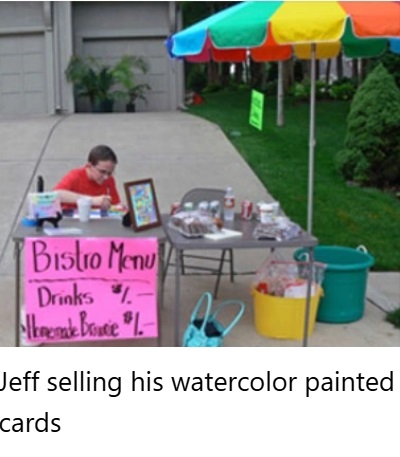
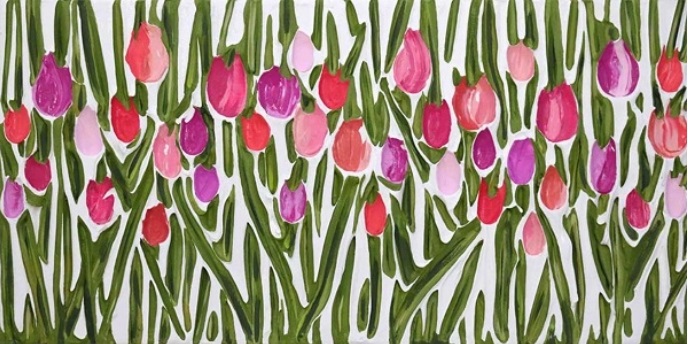
Jeff was visually impaired since childhood, but that never stopped him from pursuing his passion for art. He became a self-taught artist, known for his vibrant and textured abstract pieces as well as stunning floral designs. His journey into art began at just 12 years old when he started painting watercolor notecards during chemotherapy treatments. It was a therapeutic outlet that would eventually lead to something much bigger.

By the time he was 15, he had turned his passion into a business, officially incorporating Jeffrey Owen Hanson LLC. Fast forward to age 20, and Jeff had already raised an astounding $1 million for various charities through his artwork, all while gaining national recognition in the art world. His impressive list of clients included big names like Sir Elton John, Warren Buffett, John Cena, Billy Joel, and Dale Earnhardt Jr., showcasing just how far his talent could reach. According to his website, Jeff had a special fondness for the color purple, often saying he lived “the purple driven life,” which perfectly encapsulated his colorful spirit and zest for life despite the challenges he faced.


More about Jeff’s art and philanthropy

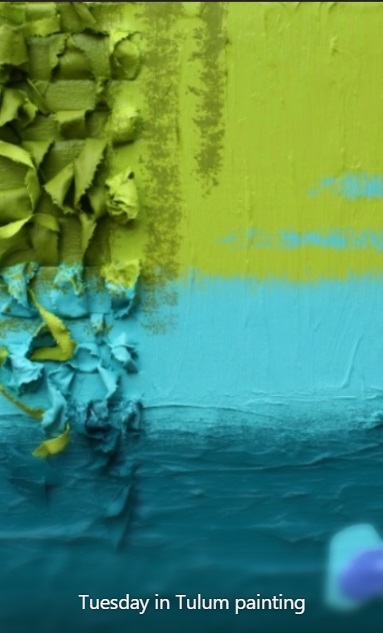
In spite of his condition, Jeff developed his strong visual style of painting with heavy paste to make vibrant 3D effects. Similar to Van Gogh’s impasto style, Jeff’s paintings are loaded with piles of paste which make them come to life.

What made Jeff special and a standout was his desire to use his art to help others. As a result, his philanthropic efforts benefited over 200 charities from the auctions of his artwork.

Jeff received numerous awards including Young Philanthropist of the Year, Young Entrepreneur of the Year, People Magazine’s “Hero Among Us”, NASCAR Foundation’s Betty Jane France Humanitarian Award and was counted in CNN’s “Impact your World”.


Jeff’s legacy

In his lifetime, Jeff’s art business raised millions of dollars from auctions and sales of his paintings. By age 27, Jeff had reached his goal of raising $7 million for charity. He dreamed big and left an even bigger legacy. As an artist, you cannot ask for more than that.

From the beginning, I’ve been tremendously impressed with Jeff’s art and philanthropic efforts. Most artists are just trying to make a living to survive. With a clear north star and support from parents and family, Jeff was able to paint his way to his goals. In his career, he had gained popularity with television coverage, awards; as well as meeting famous celebrities like Sir Elton John who purchased his art.

Tuesday in Tulum
Irish Mood
Amsterdam Awakens

I have long admired Jeff for his spirit when he was alive and even more now. He is a true hero in my eyes. As his website states, he is “changing the world through art”. Jeff believed that – “Every act of kindness helps create kinder communities, more compassionate nations and a better world for all – even one painting at a time.”

Fortunately, Jeff’s work lives on as his parents have taken on the privilege of continuing his dream of art and philanthropy. As they paint in his signature vibrantly-colored and textured style, he smiles on them as he paints his way through heaven.


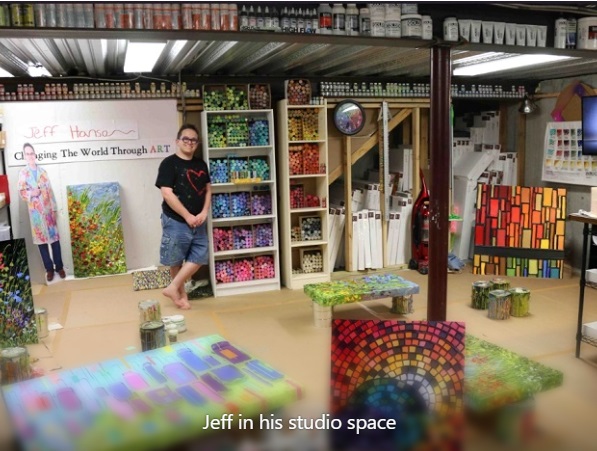
Jeffrey Owen Hanson Art Gallery and Studio

See more behind the scenes photos – https://jeffhansonart.com/studio-shots/


What inspires me about Jeff Hanson

I learned about Jeff, his situation and his art at a perfect time. I was tired of art and was contemplating quitting my art practice. I was attracted to his use of color and heavy texture in his pieces. Also impressive was Jeff’s tenacity and progression in his art practice. He started from humble beginnings and grew his art to earn millions of dollars for worthy causes. Jeff was a philanthropic artist who inspired me to include philanthropy in my art practice. – Angela


Resources

[INSPIRATION] PEOPLE – Georgia O’Keefe (1887–1986)

fierce, independent and unapologetic

A women of my own heart

While there are so many facets to Georgia O’Keefe, I really enjoy this quote from her via the Georgia O’Keefe museum. Georgia’s life was reflective of someone who was fierce, independent and unapologetic about her life.

She was natural, authentic and ultimately lived and worked in her own truth. One can only admire these traits, whether they are born or created. For me, it has taken decades of shredding societal expectations thrust upon me. Now, I am to live as organically and intimately close to my Self as possible. This pathway informs my every move and being.

Thank you to Georgia O’Keefe for your life and your work. Thank you to the Georgia O’Keefe Museum to continuing their lovely work and homage to this most influential human being.

Note: Research is forthcoming.


[INSPIRATION] PEOPLE – Tina Turner (1939 – 2023)

She went after what she wanted and GOT IT

Tina…No Need to be Unhappy about Death

Born in the humblest of beginnings with little love is not an unusual childhood story. For those born of a certain time, certain part of the country, this story is the norm. What is not norm is being born into a poor black woman’s skin in Nutbush, Tennessee and being able to elevate and transport to a triumphant world star living in Zurich, Switzerland.

This physical transformation had to have been the mere side effect of a great mental, emotional and spiritual transformation. How does this happen? I suspected that Buddhism and the practice meditation had so much to do with it. Whatever it is, I want a part of it.


The most prevailing thoughts that I have around this extraordinary woman are that –

  • extraordinary is an understatement
  • she was a subject matter expert in music, singing, entertainment
  • she had an immense desire to elevate and transform herself
  • elevating her physical surroundings from living in the US to living in Europe was necessary
  • she tapped into a cosmic power to elevate from her human condition
  • she wanted, went after and got it
  • she worked for what she got unlike many in this entitled generation
  • she is happy

So, there is no need to be unhappy about the closing chapter of a human life well lived. It’s like ending a great book. When the last page is turned, if the book was compelling enough, the creative juices keep flowing as the book’s story leaves a lasting memory never to be forgotten. Tina’s book was just that compelling.

Note: Research is forthcoming


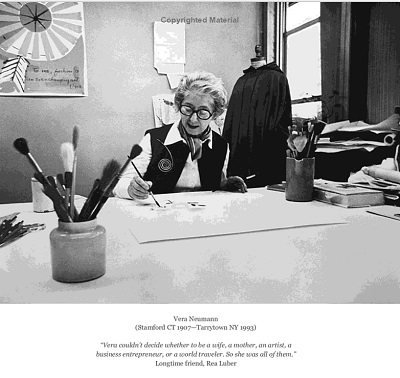
[INSPIRATION] PEOPLE – Vera Neumann (1907 – 1993)

The Lady Behind the Ladybug

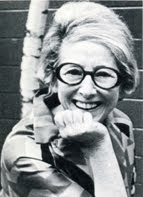
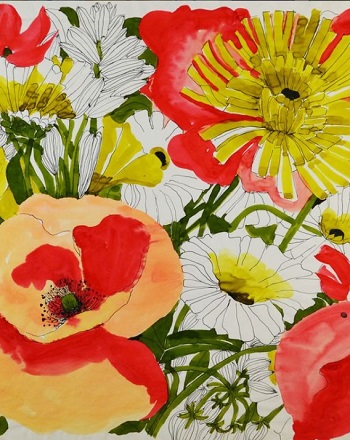
Vera Neumann (1907-1993) was an American-born artist who started a design company from her kitchen table in 1947. She is best known for her extensive, prolific designs for home décor, fine art and industrial products. Her designs are full of rich, vibrant colors and expressive symbols. Her logo is recognized all over the world for its simply “Vera” title next to the distinctive, colorful ladybug.


Impact of Her Work

Vera’s designs have translated well over the years into wearables such as scarves, jackets and jewelry. You can also find her designs on bedding, tableware, glassware, ceramics and virtually any household item imaginable.  Vera believed that people should surround themselves with art.

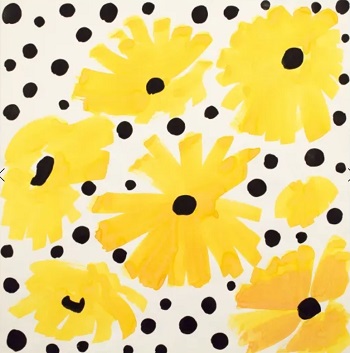
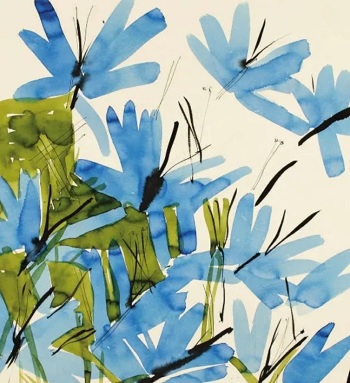
Floral design
Scarf with infamous Vera logo on the bottom right corner

Most Famous Works

Vera was by far the most successful entrepreneur of her time. Her company the Vera Company (http://www.theveracompany.com), owns the entire collection of Vera’s designs and sells licensed items in high end stores like Bloomingdales, Nordstrom’s and Lord and Taylor.


What Inspires Me About Vera Neumann

I fell in love with Vera Neumann in the early ’80’s before I even knew what design was. Before I even knew my own design sensibility. As a young girl I collected images of flowers.

The vibrant colors and warm fuzzies from the subject matter dictated my love of the florals and nature in general. To me, Vera’s surface designs exhibited the life and energy that I always enjoyed when viewing florals.

On the business side, I’m inspired by the fact Vera copyrighted her designs in the Library of Congress. To date of this writing, the company has over 8,000 designs copyrighted in the Library of Congress.

-Angela


From Susan Seid book

[INSPIRATION] PEOPLE – Abstract Expressionism – Norman Lewis (1909 – 1979)

making aesthetically beautiful work made a valuable contribution 
to society and culture

Artist BioIMAGE_norman-lewis

Norman Lewis (1909 – 1979) was technically the first African-American abstract expressionist painter and teacher.

He lived in Harlem all of his life and was born to Bermudian parents.  Lewis maintained studio space at the Harlem Art Center and participated (along with Jackson Pollock) in  art projects for the Works Progress Administration or WPA. The WPA was a massive effort in the 1930’s under FDR’s New Deal agency to put unemployed people back to work.


Artist Statement

Norman started painting mostly figurative art about the plight of Blacks in America with subjects like the bread lines of the poor and police brutality. Then, in the ’50’s, he switched to a more abstract style that celebrated the aesthetics of art. He often felt pressured to make works that reflected the plight of the Blacks in America. He felt that his goal of making aesthetically beautiful work made a valuable contribution to society and culture.


Most Famous Works

His most famous work is Migrating Birds which received the Carnegie International Award from the Carnegie Museum. Norman Lewis was the first African-American to receive such an award. A New York Herald-Tribune writer stated that the artwork was the most significant event in the field art for that year.

Below left is The Yellow Hat (1936); Below right is Migrating Birds (1953)


Famous Quote

“…the goal of the artist must be aesthetic development, and in a universal sense, to make in his own way some contribution to culture.” (Norman Lewis)


Norman Lewis Retrospective

I’m so pleased to be able to attend the first comprehensive museum exhibit on Norman Lewis’ work by the Philadelphia Academy of Fine Art at the end of March. The exhibit goes on until April 3rd so I plan to just make it. Afterwards, it will travel to Amon Carter Museum in Fort Worth, Texas and then onto Chicago, Illinois.

UPDATE
IMAGE_procession

Last week I received the exhibition catalog from the PAFA (Philadelphia Academy of Fine Arts) show of Norman Lewis. It is a wonderfully detailed, well-written book that is a whopping 288 pages. The art pieces are in full color and many cover a full page!

In reading and researching the wonderful tidbits, I’ve learned that Norman Lewis actually had an estimated 2,500 works. In addition to paintings, sculpture and drawings, he also completed some quilts! Impressive. He was a true artistic spirit…willing to experiment with many different mediums.

What Inspires Me About Norman Lewis

I completely connect with his sentiment in making beautiful art in that I,
too, make "beautiful" work. Even though I strive to make soulful abstracts; 
over the years, I've often felt that I needed to make work that spoke to 
the problems in our society. I see many other quilters and painters doing 
that and have often felt guilty for not saying something "more 
substantial". Deep down, I feel that every artist makes a contribution. 
That is the beauty of art. Everyone has something to contribute. So, the 
beautiful scenes of Water Lillies by Monet are just as important as the 
Last Supper by Leonardo da Vinci. - Angela

Resources