Forgive me folks…as I have not written in a while. I have been wildly neglectful of my newsletter. Last year was a bit of a rough year as my family suffered a lost and I had to take care of family business. As I grieve the loss, I cannot help but think this is a rebirth for me in all things. I want to make things simple and impactful in my life. What comes to my mind is just to keep working and keep creating. So, that’s what I will do. The new year is exciting and holds lots of creative adventures for me.
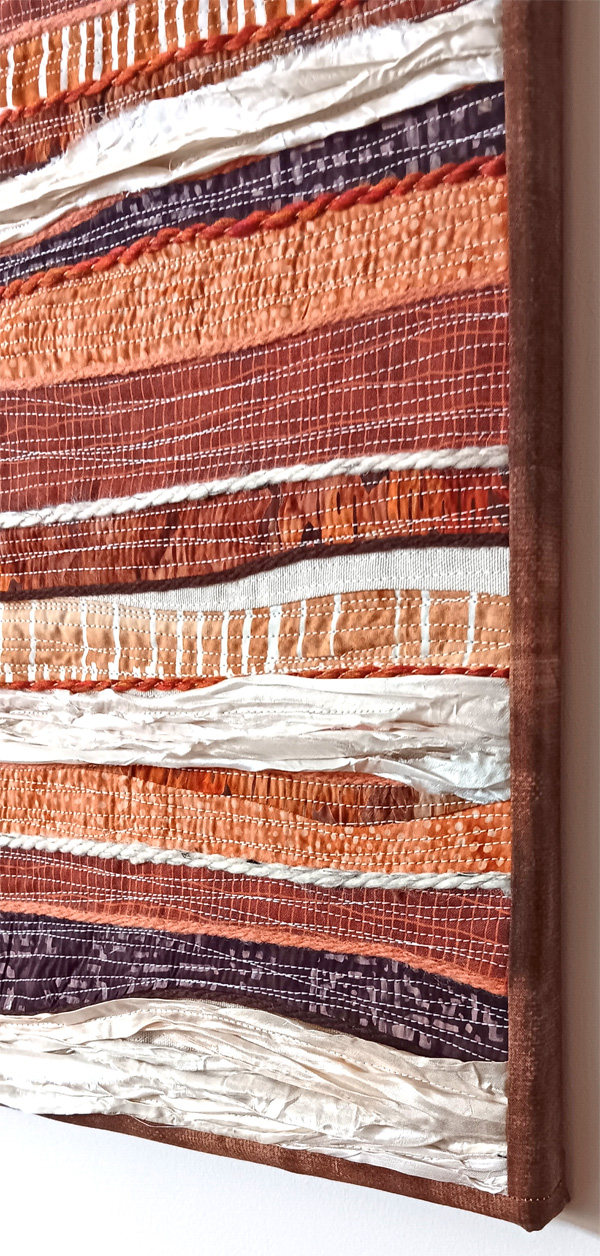
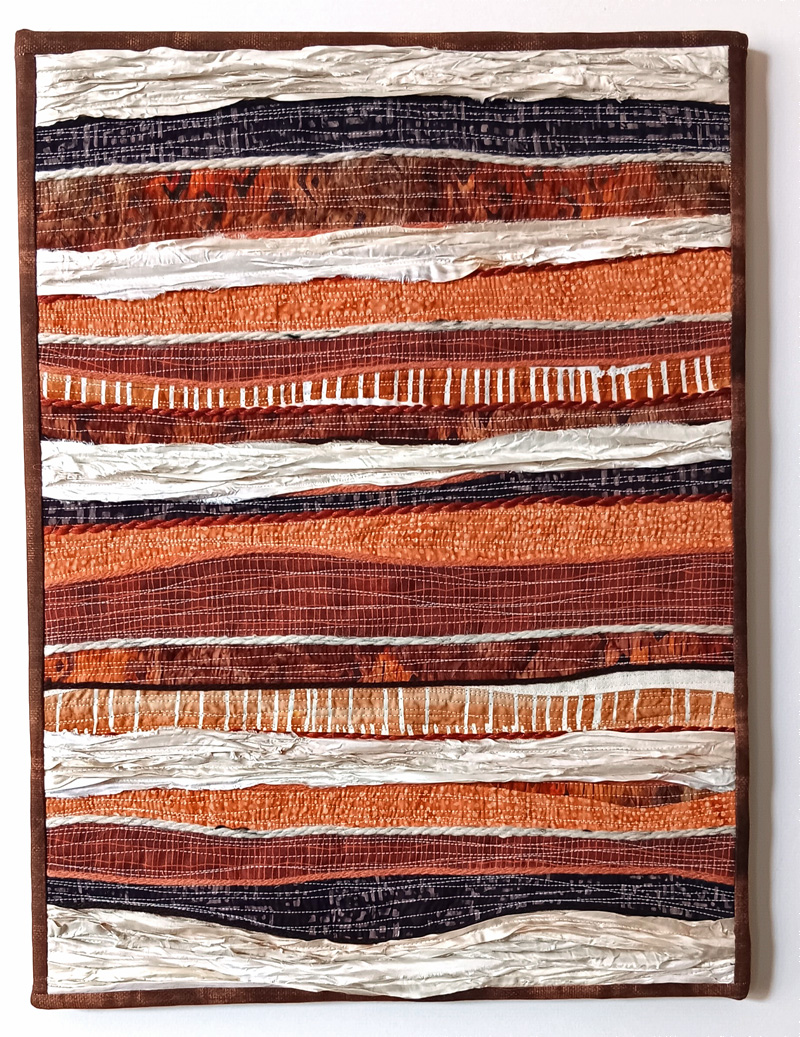
Earth Moving
(latest release from the Earth Series)
What’s happening…New Work
Rochester Contemporary Art Center (RoCo) Annual Exhibition 2024…Earth Moving
Since I sold 2 pieces at RoCo 6×6 show this year, they invited me to send a piece for their Annual Exhibition. I was just finishing Earth Moving so packed it up and sent it on.
Earth Moving (2024)
So, Earth Moving will run for $300. As you know, I have talked about my viable pricing before which is that I adhere to practices in the studio that keep my prices lower and more affordable. I think this is important in this day and age.
The show is running – December 6, 2024 – February 15, 2025 through RoCo Art Center. So, you can purchase from them during that time. If you do, then 25% will go to support this art center and then 75% will go to my studio. It is really a win-win.
Studio Happenings
Website additions
Painting & Digital Surface Designs
Project section on the website
I’ve been pulling together materials to present as a “Project” section on the website. This is a way to consolidate the creative process and research projects that I complete. Check out this section here – https://angelaheathart.com/projects/
Opening my Painting Studio again
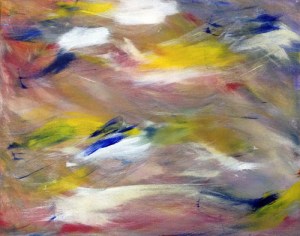
The last time I painted was in 2017. So much life has happening since then. My time lapse in painting wasn’t really because of being busy. It was because I just felt that I had nothing to say. My recent Earth series has really inspired me to re-explore some of the last paintings packed away in my garage. I have been sketching my ideas for what I want to explore with my painting in the coming year.
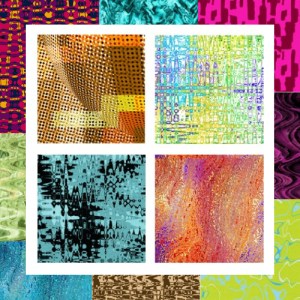
Working on new digital surface designs
My goodness, it has been a long while. Actually, I’ve been creating surface designs on and off for the past few years. I am finally ready to release a small collection of designs and prototype them as fabric at Spoonflower. I’ve been organizing my collections in my online Spoonflower store and working on branding my surface designs as a separate effort. For a long time, I’ve been looking to split off my digital surface designs and present them across various platforms. So more to come on this endeavor.
More Earth Series pieces
As of this writing I have –
(2) more 12″ squares to stretch on canvases
(2) 18″x24″ to finish sewing (similar to Earth Moving)
(2) totems 12″x36″ to finish sewing
Sharing what I’ve learned…
For me the mantra is simple – keep working and keep creating!
Learn by Doing – Commit to practicing your art
Blank Canvas – Starting without knowing where you are going when you start
Patience – Nurture your own ability
Wabi Sabi – Embrace the imperfections
Experimentation – Just try everything
Instinct – Develop a practice of trusting yourself again
No Mistakes– Everything is meant to be; no need to apologize for anything
[On becoming an artist]...become a blues singer - only you sing on the canvas
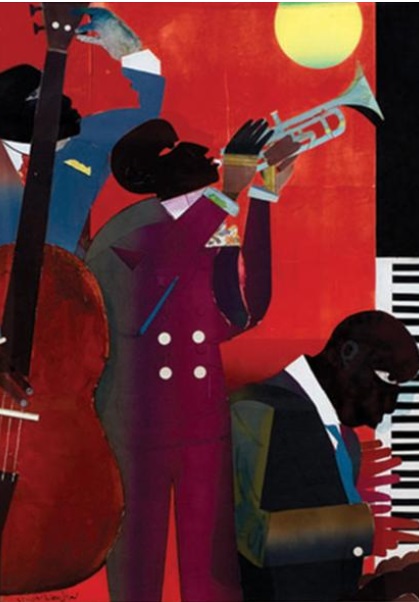
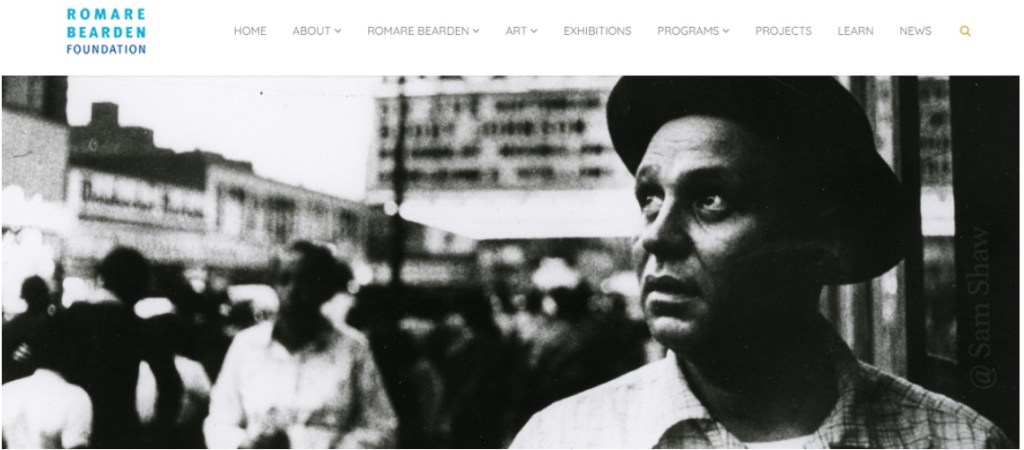
Released in 1980, Romare Bearden’s painted collage, Up at Minton’s is an homage to an iconic jazz supper club in Harlem, New York started in 1938 by saxophonist, Henry Minton. This colorful, vibrant image shows an African American trio of jazz musicians playing at the club.
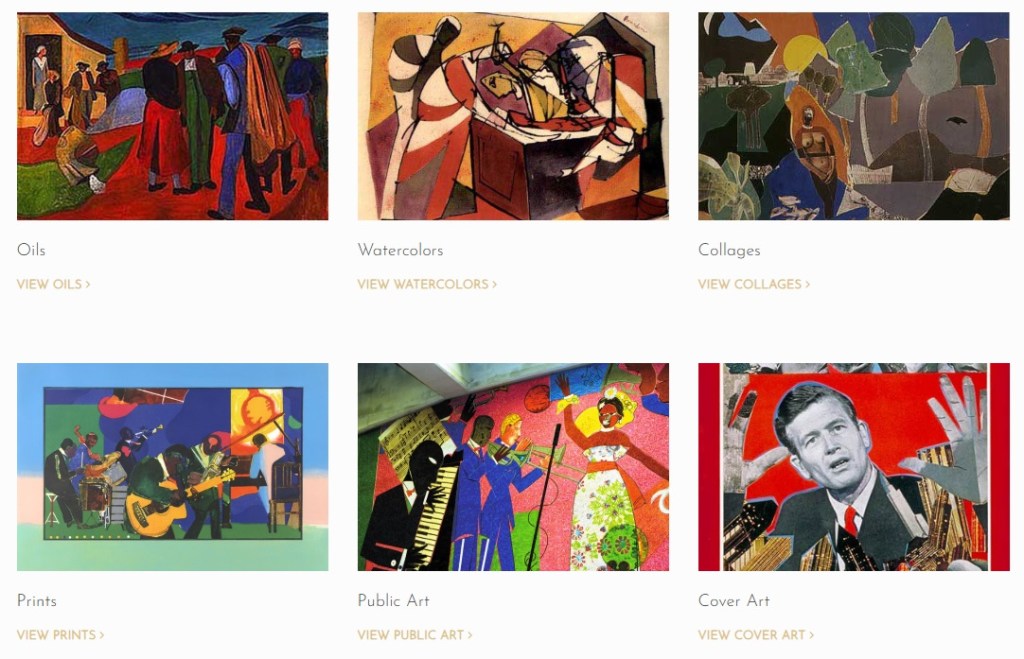
Bearden called his technique collage painting. He started by collecting images of a subject from magazines, newspapers and wallpapers. Then the images were arranged and glued onto a large canvas. Finally, Bearden would paint in sections of the composition.
Deeply inspired by jazz and blues, Bearden loved to improvise in his art much like musicians. In becoming an artist, he would say “become a blues singer – only you sing on the canvas. You improvise — you find the rhythm and catch it good, and structure as you go along – then the song is you.” (NGA.gov)
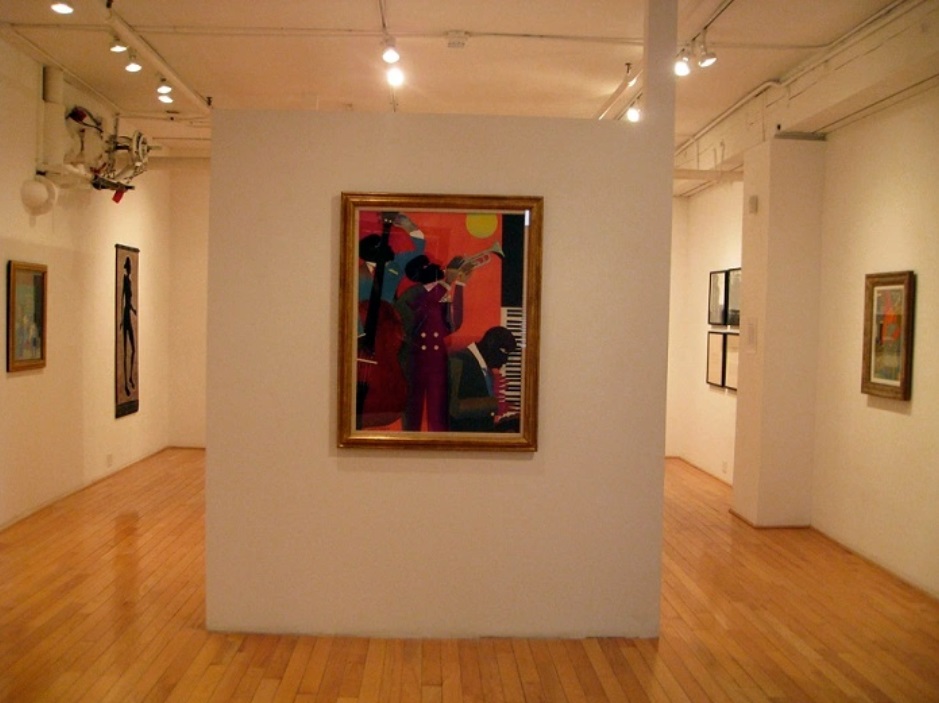
Image credit: Up At Minton’s at the Flomenhaft gallery in Manhattan, NY. Art Observer, 2012
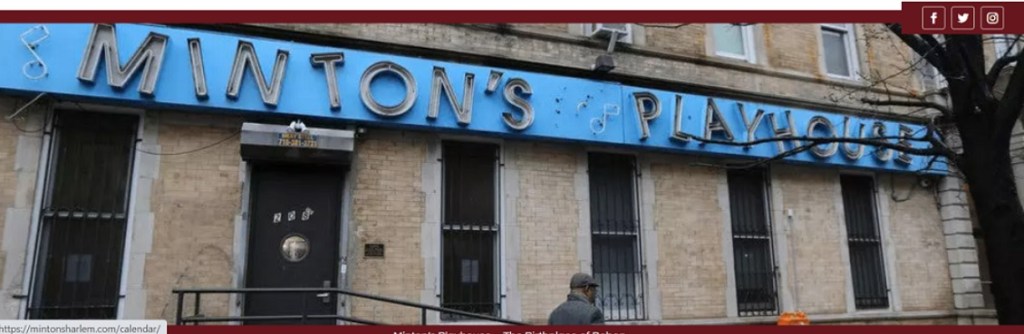
Bearden’s painting Up at Minton’s is based on the iconic Minton’s Playhouse, a jazz dinner club located in the Cecil Hotel in Harlem, New York City. The club was started by saxophonist Henry Minton in 1938 and is credited as the birthplace of Bebop (aka Modern Jazz). Since the 1940’s, Minton’s has hosted an extensive roster of players namely, Thelonius Monk, Charlie Parker, and Dizzy Gillespie. The club closed in 1974 and was reopened in 2006; closed again in 2010 to reopen in 2012. Today, under proprietor, Earl Spain, the new Minton’s Playhouse has an active calendar of today’s musicians.
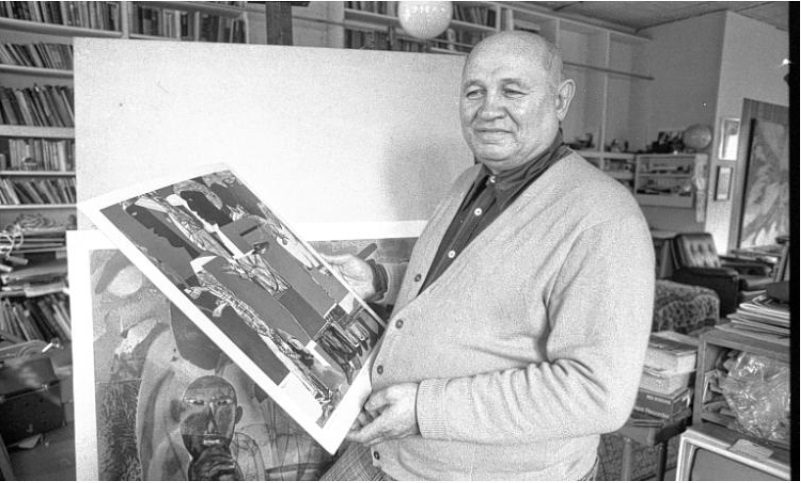
Romare Bearden was born in 1911 in Charlotte, North Carolina and died in 1988. As a young child, he moved from the South to Harlem in Manhattan, New York City.
This move surely represented a 180-degrees in that Bearden was exposed to the vibrant arts and sounds of the bustling Harlem community.
As a growing teenager and young adult, Bearden would decide to become an artist; routinely visit family in North Carolina and spend summers working in Pittsburgh, Pennsylvania. He went to New York University for schooling and also studied art history and philosophy at the Sorbonne in Paris, France.
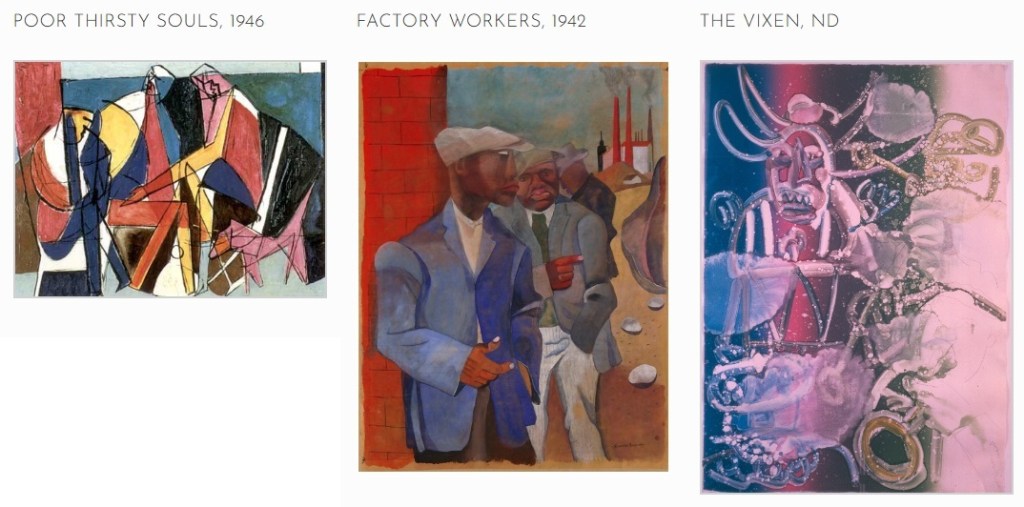
As an artist, Bearden’s work is prolific and crosses multiple media such as painting, collage, and sculpture. This is among the many things I admire and take from Romare Bearden. It is that as an artist, you don’t have to be “married” to one media such as textiles or paint. Since art is about expressing and sharing your thoughts, you can represent your art in as many ways as necessary.
His work has influences from world culture, music, design, and life. Much of his work depicts African American life in the South and the Harlem Renaissance in the 1920’s which captured the emergence of the arts by African Americans in the United States.
Romare Bearden had great interests in celebrating and promoting the work of African American artists. He formed an art collective called Spiral, which allowed its members to discuss exhibiting art that would comment on the Civil Rights Movement. Bearden’s art career and achievements are something to be admired. His work can be found permanently in the Smithsonian Museum, Metropolitan Museum and many others.
I choose Bearden because he was a prolific artist in different medium. As he said – “become a blues singer – only you sing on the canvas. You improvise — you find the rhythm and catch it good, and structure as you go along – then the song is you.” This to me, embodies what I strive to do as an artist. That is, to step into the world I am purveying, learn the cadences to make the art tell a story. Then, I keep it moving. – Angela
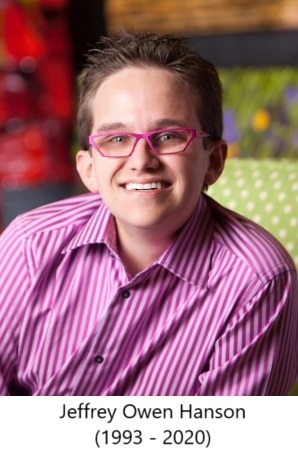
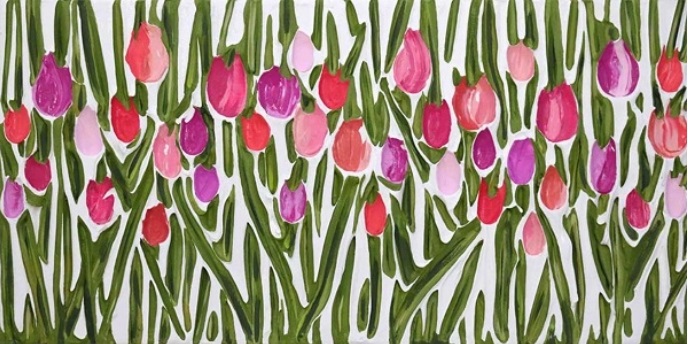
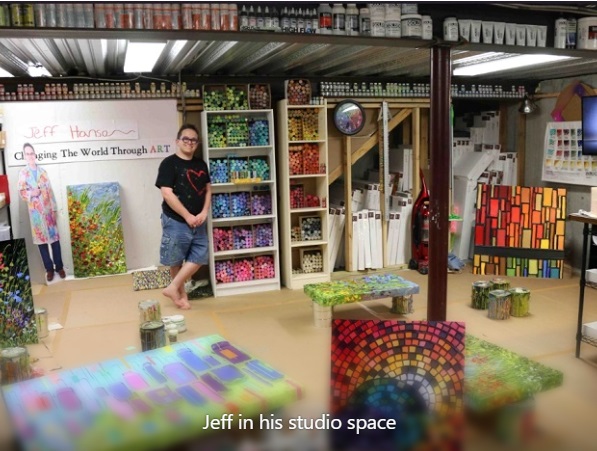
I was first introduced to Jeff Hanson’s paintings when I saw his story on CBS’ Sunday Morning program. Around the same time, I was nursing an injury that stopped me from making my art. I was planning to give up on my artistic endeavors and then heard Jeff’s story.
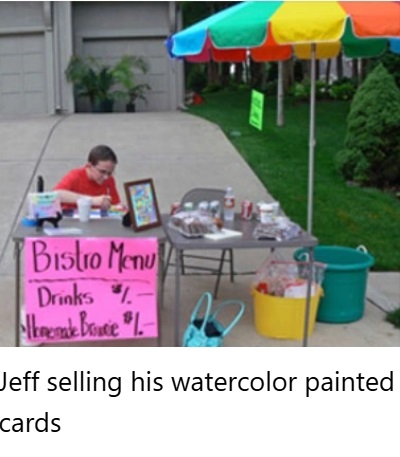
Jeff was visually impaired since childhood, but that never stopped him from pursuing his passion for art. He became a self-taught artist, known for his vibrant and textured abstract pieces as well as stunning floral designs. His journey into art began at just 12 years old when he started painting watercolor notecards during chemotherapy treatments. It was a therapeutic outlet that would eventually lead to something much bigger.
By the time he was 15, he had turned his passion into a business, officially incorporating Jeffrey Owen Hanson LLC. Fast forward to age 20, and Jeff had already raised an astounding $1 million for various charities through his artwork, all while gaining national recognition in the art world. His impressive list of clients included big names like Sir Elton John, Warren Buffett, John Cena, Billy Joel, and Dale Earnhardt Jr., showcasing just how far his talent could reach. According to his website, Jeff had a special fondness for the color purple, often saying he lived “the purple driven life,” which perfectly encapsulated his colorful spirit and zest for life despite the challenges he faced.
More about Jeff’s art and philanthropy
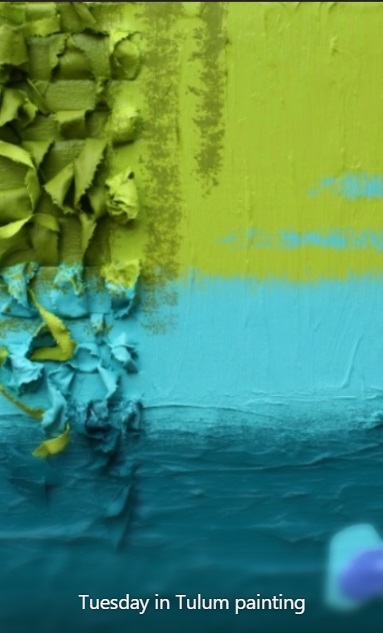
In spite of his condition, Jeff developed his strong visual style of painting with heavy paste to make vibrant 3D effects. Similar to Van Gogh’s impasto style, Jeff’s paintings are loaded with piles of paste which make them come to life.
What made Jeff special and a standout was his desire to use his art to help others. As a result, his philanthropic efforts benefited over 200 charities from the auctions of his artwork.
Jeff received numerous awards including Young Philanthropist of the Year, Young Entrepreneur of the Year, People Magazine’s “Hero Among Us”, NASCAR Foundation’s Betty Jane France Humanitarian Award and was counted in CNN’s “Impact your World”.
Jeff’s legacy
In his lifetime, Jeff’s art business raised millions of dollars from auctions and sales of his paintings. By age 27, Jeff had reached his goal of raising $7 million for charity. He dreamed big and left an even bigger legacy. As an artist, you cannot ask for more than that.
From the beginning, I’ve been tremendously impressed with Jeff’s art and philanthropic efforts. Most artists are just trying to make a living to survive. With a clear north star and support from parents and family, Jeff was able to paint his way to his goals. In his career, he had gained popularity with television coverage, awards; as well as meeting famous celebrities like Sir Elton John who purchased his art.
I have long admired Jeff for his spirit when he was alive and even more now. He is a true hero in my eyes. As his website states, he is “changing the world through art”. Jeff believed that – “Every act of kindness helps create kinder communities, more compassionate nations and a better world for all – even one painting at a time.”
Fortunately, Jeff’s work lives on as his parents have taken on the privilege of continuing his dream of art and philanthropy. As they paint in his signature vibrantly-colored and textured style, he smiles on them as he paints his way through heaven.
I learned about Jeff, his situation and his art at a perfect time. I was tired of art and was contemplating quitting my art practice. I was attracted to his use of color and heavy texture in his pieces. Also impressive was Jeff’s tenacity and progression in his art practice. He started from humble beginnings and grew his art to earn millions of dollars for worthy causes. Jeff was a philanthropic artist who inspired me to include philanthropy in my art practice. – Angela

 Earth Moving
 Earth Moving (2024)




![[INSPIRATION] PEOPLE – Up at Minton’s with Romare Bearden (1911 – 1988)](https://angelaheathart.com/wp-content/uploads/2024/12/image_bearden-bio.jpg?w=801&h=483&crop=1)



![[INSPIRATION] PEOPLE – 3D World of Color by Jeff Hanson (1993 – 2020)](https://angelaheathart.com/wp-content/uploads/2024/12/image_jeff-hanson1-1.jpg?w=298&h=452&crop=1)



 angelaheathart.com